Skip to content

Believe me when I say that a trip to Greece is the stuff of dreams. It’s a country of sun-drenched islands, ancient ruins that whisper stories of the past, and water so blue it almost doesn’t look real.
But as you plan your perfect island-hopping adventure, a practical question might pop into your head: “What happens if I get sick on a small island in Greece?”
It’s a common anxiety for even the most seasoned travelers. The thought of navigating a foreign healthcare system can be intimidating, especially when you’re far from a major city. The good news is that with a little preparation, getting medical care in Greece is very manageable. This guide will walk you through everything you need to know, so you can explore with confidence and peace of mind.
Understanding the Greek Healthcare System: Public vs. Private

Like many European countries, Greece has a two-tier healthcare system, and it’s helpful for travelers to understand the difference.
Public Healthcare (ESY) The Greek National Health System, known as ESY, provides healthcare to all its citizens. It’s accessible, and for EU citizens carrying a valid EHIC card, it offers care at the same cost as a local (often free or for a small co-payment). However, the public system, particularly outside of major cities like Athens, can be underfunded. This can lead to long waits, older facilities, and potential language barriers with staff.
Private Healthcare For most tourists, private healthcare is the preferred choice. Private hospitals and clinics, especially in Athens and Thessaloniki, are known for their modern facilities, English-speaking doctors and staff, and high standards of care. They are more expensive, but they offer a level of comfort and efficiency that most travelers are looking for in a stressful situation.
The Role of Pharmacies in Greece
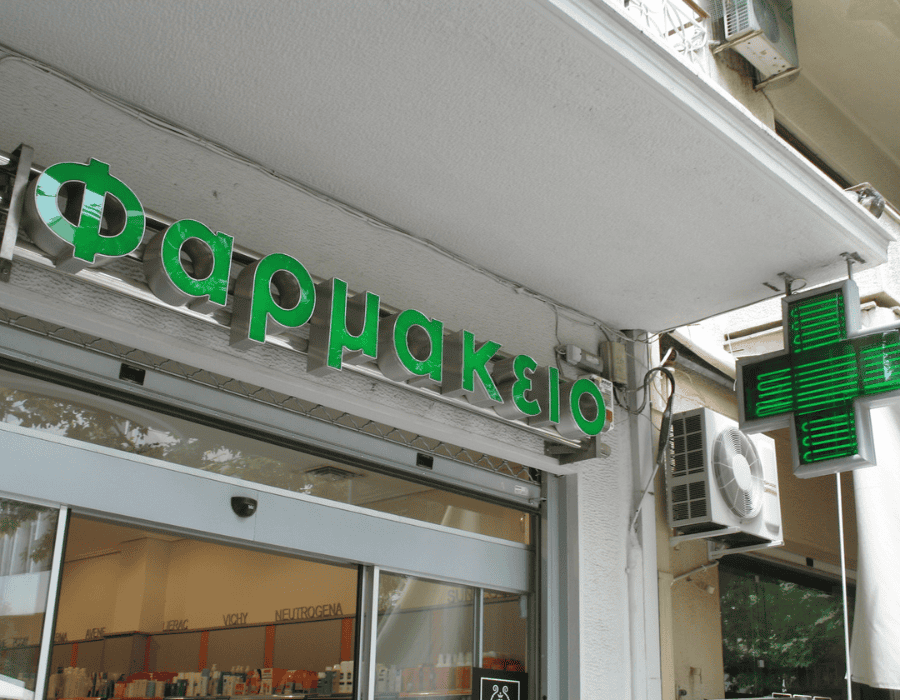
In Greece, the local pharmacy (ΦΑΡΜΑΚΕΙΟ) is a traveler’s best friend. You’ll find them everywhere, easily identified by a glowing green cross. They should be your first stop for any minor health issue.
Greek pharmacists are highly trained and can offer excellent advice for common travel ailments like sunburn, insect bites, minor cuts, or an upset stomach. They can provide remedies and recommend if you need to see a doctor.
You’ll also find that many medications that require a prescription in other countries are available over the counter in Greece. This can be incredibly convenient, but it’s always best to consult the pharmacist.
For after-hours or weekend needs, pharmacies operate on a rotation system. You can find a notice posted on the door of any pharmacy indicating which one in the area is currently on duty.
Healthcare on the Greek Islands

This is the most important consideration for anyone planning an island-hopping trip. The level of medical care varies dramatically from island to island.
Larger, more populated islands like Crete, Rhodes, and Corfu have full-service public hospitals and numerous private clinics that can handle most medical issues.
However, smaller islands (the kind you might dream of for a quiet escape) have much more limited facilities. They typically have a basic public medical center (kentroygeias) or, in some cases, just a single doctor’s office. These are fine for minor issues, but they are not equipped for serious emergencies.
For any serious medical issue on a small island, you will almost certainly need to be medically evacuated to a larger island or the mainland. This is often done by ferry or, in urgent cases, by helicopter. This is the single most important reason why travel insurance with comprehensive medical evacuation coverage is essential for a trip to Greece.
For EU Citizens: The European Health Insurance Card (EHIC)
If you are a citizen of an EU country, the European Health Insurance Card (EHIC) is a valuable thing to have. It gives you access to state-provided healthcare in Greece under the same conditions and at the same cost as a Greek citizen.
However, it is crucial to understand the limitations of the EHIC. It only covers you in the public healthcare system (ESY). It does not cover private healthcare. If you choose to go to a private clinic or hospital, you will have to pay the full cost.
Most importantly, the EHIC does not cover medical evacuation. If you need a helicopter to take you from a small island to a hospital in Athens, the EHIC will not pay for it. This is why even for EU travelers, comprehensive travel insurance is still a must-have.
What to Do in an Emergency
Knowing the right number to call in an emergency can save precious time.
- Dial 112: This is the single European Emergency Number. It works everywhere in the EU, it’s free to call, and the operators speak English. They can dispatch the police, fire department, or an ambulance. This is the most important number to save in your phone.
- Ambulance (166): This is the direct number for the national ambulance service, known as EKAV.
In major cities, private hospitals also operate their own ambulance services, which you can call directly if you know which hospital you want to go to.
Why Travel Insurance is a Must-Have for Greece

This cannot be stressed enough: do not travel to Greece without comprehensive travel insurance.
For non-EU travelers, it is your only protection against potentially high out-of-pocket costs for private medical care. A hospital stay or a serious procedure could become very expensive without it.
For EU travelers, travel insurance fills the critical gaps that the EHIC leaves behind. It gives you the option to use the more comfortable private system and, most importantly, it covers the cost of medical evacuation, which can run into thousands of euros.
How Air Doctor Can Help in Greece
Even with all this preparation, finding a doctor you trust when you’re feeling unwell can be a challenge. This is especially true on the islands, where you might not know where to start looking.
Air Doctor simplifies this process. The app can help you find a trusted, English-speaking doctor near you, whether you’re in the heart of Athens or on an island like Mykonos or Santorini. You can browse doctors, read reviews, and book an appointment directly.
The app also offers the convenience of telemedicine. For many minor issues, a video consultation with a doctor can be the perfect solution. You can get professional medical advice without having to leave your hotel room, allowing you to get back to enjoying your vacation as quickly as possible.
In Short
- Greece has both public and private healthcare; private is generally recommended for tourists.
- Pharmacies are your best first stop for minor health issues.
- Healthcare on small islands is very limited. For serious issues, you will need to be evacuated.
- The EHIC is useful for EU citizens but does not cover private care or medical evacuation.
- Dial 112 in an emergency.
- Travel insurance with medical evacuation coverage is essential for all travelers.
About Air Doctor
With the Air Doctor app in your pocket, you can access medical care and receive expert medical guidance anywhere you travel.
Air Doctor offers a wide range of benefits, including:
- A global network of multi-lingual doctors and specialists
- Choice of clinic, at-home (hotel), and video consultations
- 24/7 multi-lingual support
- Transparent pricing and reviews
- Most common medical specialties, including gynecologists, cardiologists, and dentists.
FAQs
Yes, if you are an EU citizen, your EHIC card gives you access to public healthcare in Greece at the same cost as a local. However, it will not cover private healthcare or medical evacuation, so comprehensive travel insurance is still highly recommended.
Dial 112. This is the pan-European emergency number that connects you to police, fire, and ambulance services. The operators speak English.
Yes, but the level of care varies greatly. Large islands like Crete and Rhodes have hospitals, but smaller islands may only have a basic medical clinic or a single doctor. For any serious medical issue on a small island, you will likely be transferred to a larger island or the mainland.
While official policies are becoming stricter, it is still common for Greek pharmacists to provide certain antibiotics for simple infections without a doctor’s prescription. However, it is always best to consult a medical professional for a proper diagnosis.