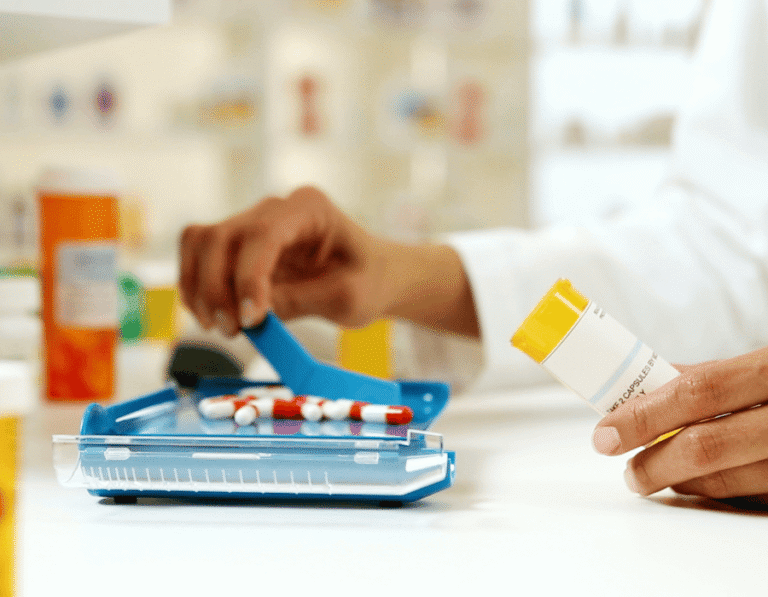
Running low on your medication in Singapore? The fix is usually simple: see a doctor registered in Singapore, who can prescribe what you need if it’s right for you. Here’s how it works, what to bring, what it costs, and the medicine rules to know before you fly.
Quick answer: A Singapore pharmacy can’t fill a prescription written by your doctor at home. Under Singapore law, a valid prescription must come from a doctor or dentist registered in Singapore. So see a local GP, either in person or by video, and bring your medicine in its original packaging plus your home prescription or a doctor’s letter. If the doctor prescribes, you can often collect the medicine at the clinic, or take the prescription to a retail pharmacy.
Can You Use Your Home Prescription in Singapore?

No. Singapore’s Health Products (Therapeutic Products) Regulations only treat a prescription as valid if it’s written and signed by a “qualified practitioner”, meaning a doctor or dentist registered in Singapore (or a recognized collaborative prescribing practitioner). A prescription from a doctor in your home country doesn’t meet that test, so a pharmacist can’t dispense from it.
Your home prescription is still useful. It shows a local doctor exactly what you take, the dose and how often, which makes the appointment quicker.
What you can buy without a prescription, according to the Health Sciences Authority (HSA):
- Pharmacy-only medicines: medicines for minor ailments such as allergic rhinitis, cough, diarrhea and nausea. You get these from a pharmacist, no doctor’s prescription needed.
- General sale list medicines: products such as paracetamol for fever and headache, and antacids for heartburn, sold off the shelf in pharmacies, clinics and retail stores.
If you’re feeling unwell rather than just running low on medicine, our guide on what to do if you get sick in Singapore covers clinics, hospitals and emergencies.
How to Get a Prescription Refill in Singapore: Step by Step

Step 1: Choose How to See a Doctor
- Private GP clinics: the most common choice for travelers. Opening hours and booking rules vary from clinic to clinic, so check before you go. HSA points visitors to GPGoWhere to find GP clinics and to the HealthHub directory of licensed healthcare providers.
- Polyclinics: government clinics that also see non-residents, who pay non-subsidized rates (see costs below).
- Video consultations: handy if you’re short on time or don’t feel well enough to go out. Singapore’s Ministry of Health has said that doctors providing telemedicine are expected to maintain the same standards of care as in-person consultations, and should see patients in person when a physical assessment is warranted. Prescriptions following a video consultation are subject to the doctor’s professional assessment, licensing requirements, and applicable local laws.
In Singapore, the Air Doctor app lets you choose a clinic, at-home (hotel) or video consultation where available, and see the price before you book.
Step 2: Bring the Right Documents
The more the doctor knows, the easier the appointment. Bring:
- Your medication in its original box or bottle, with the pharmacy label if it has one
- Your prescription from home or a letter from your doctor, showing the generic (active ingredient) name, dose and how often you take it
- A list of any other medicines and allergies
- Your passport, in case the clinic asks for ID when you register
Tip: photograph your prescription and medicine labels before you travel. A clear photo helps if you’ve lost the original.
Step 3: At the Consultation
The doctor will ask about your health and the medicine you take, then decide whether to prescribe, and what. Two things help:
- Know the generic name. Brand names can differ between countries, which is why the US CDC advises carrying prescriptions that include the generic names of your medicines.
- Say how long you’re staying, so the doctor can take it into account.
Step 4: Pick Up Your Medicine
HSA notes that prescription-only medicines can be bought from clinics once a doctor prescribes them, so you can often collect your medicine before you leave the clinic. If not, take your prescription to a retail pharmacy. Pharmacy chains such as Guardian, Watsons and Unity have outlets across Singapore, but prescriptions are dispensed by a pharmacist, so check pharmacist hours in the chain’s store finder before you go.
Once that’s sorted, you can get back to the best things to do in Singapore.
Can You Buy Antibiotics Over the Counter in Singapore?
No. Every antibiotic tablet, capsule and syrup on HSA’s register of approved medicines is classified as prescription-only, including amoxicillin and doxycycline. A pharmacy won’t sell them without a prescription from a doctor registered in Singapore.
If you think you might need antibiotics, see a doctor. Antibiotics only treat certain bacterial infections, and they don’t work on viruses such as those that cause colds, flu and most sore throats, according to the US CDC. A healthcare professional can tell you whether you need one and which.
If you take doxycycline to prevent malaria after visiting a malaria area, CDC guidance is to keep taking it for 4 weeks after you leave that area. So if you’re about to run out, see a doctor rather than stopping early.
Bringing Your Own Medication Into Singapore
The easiest refill is the one you don’t need. If you’re still planning your trip, here’s what HSA’s guidance on personal medications (updated October 23, 2026) says:

| Your medication | What HSA requires |
|---|---|
| Medicine that needs no approval and isn’t prohibited | Up to 3 months’ supply. Carry a copy of a valid prescription or doctor’s letter from your country of residence, and keep each medicine in its original packaging, labeled with your name, the medicine name and the quantity. |
| Medicine containing a controlled substance | You must apply for HSA approval. Submit your application at least 2 weeks before you arrive. Imports of more than 3 months’ supply aren’t allowed. |
| Prohibited products | Not allowed under any circumstances, even if you stay in the transit area. Examples include medicines containing cannabis or cannabis extracts, medicines in chewing-gum form, and nicotine medicines bought outside Singapore, including nicotine replacement gums, lozenges and patches. (Approved nicotine replacement products are sold at licensed pharmacies in Singapore after a pharmacist consultation.) |
| Transiting without clearing immigration | No HSA approval is needed for controlled-substance medicines, but prohibited products still aren’t allowed. |
You don’t need to declare approved medicines at customs, but keep your approval email and supporting documents ready in case officers ask. Medicines that don’t comply can be confiscated, and enforcement action may be taken.
Controlled Medications: Plan Ahead
HSA lists controlled substances in Appendix A of its document guide. The list includes common medicines such as zolpidem (a sleeping pill), alprazolam and diazepam (benzodiazepines), codeine, oxycodone and morphine (opioid painkillers), and methylphenidate and lisdexamfetamine (ADHD medicines). If you take any of these:
- Check Appendix A for every medicine you take before you travel
- Apply for HSA approval at least 2 weeks before you arrive
- Pack enough for your whole trip, plus extra in case of delays, within the 3-month limit
For a broader look at refills in other countries, read what’s the process for filling a prescription abroad.
How Much Does a Prescription Refill Cost in Singapore?
As a visitor, you pay non-subsidized rates for the consultation and the medicine. Costs depend on the clinic and what you’re prescribed:
- Polyclinic (non-resident): at National University Polyclinics, a medical consultation costs S$83.71 including GST for non-residents (fees updated September 1, 2026), and non-residents pay an S$85 deposit when they register. Other polyclinic groups set their own fees.
- Private GP clinic: fees vary between clinics. Ask for the consultation fee when you register.
- Medicine: charged separately, depending on the drug and quantity.
Keep every receipt and ask for an itemized invoice. If your travel insurer reimburses medical costs, you’ll usually need these to claim. Some insurers work directly with Air Doctor; you can check whether yours does.
When to Get Urgent Care Instead
Some medicines shouldn’t be skipped or stopped without medical advice. NHS guidance, for example, says:
- Don’t skip insulin doses
- Don’t miss doses of epilepsy medicine
- Don’t stop warfarin unless your doctor tells you to
- Don’t stop prednisolone, a steroid, without talking to a doctor first
If you take a medicine like these and you’re running low, talk to a doctor before you run out rather than waiting for a routine appointment. And if you feel unwell after a medicine has stopped suddenly, see a doctor. Stopping antidepressants abruptly, for example, can cause withdrawal symptoms.
In a life-threatening emergency, call 995 for an ambulance. Singapore’s Civil Defence Force lists examples such as cardiac arrest, seizures, breathlessness, loss of consciousness, heavy bleeding, major injuries and stroke. For non-emergency medical advice, you can call the NurseFirst helpline on 6262 6262.
Tips for a Smooth Refill
- Don’t wait until your last pill. Arrange a refill while you still have a few days’ supply left.
- Know the generic name. Brand names can differ between countries; the active ingredient doesn’t.
- Bring a doctor’s letter. It tells a local doctor exactly what you take and why.
- Mention how long you’re staying. It helps the doctor decide how much to prescribe.
- Keep paperwork together. Receipts, invoices and doctor’s notes make insurance claims easier.
Planning the rest of your trip? See our Singapore travel tips and our traveler’s guide to healthcare in Singapore.
In Short
- Singapore pharmacies can’t fill a prescription from home. You need a prescription from a doctor registered in Singapore.
- See a local GP in person or by video, and bring your medicine in its original packaging plus your home prescription or a doctor’s letter.
- Antibiotics are prescription-only in Singapore.
- You can bring up to 3 months’ supply of most personal medicines, but medicines with controlled substances need HSA approval, applied for at least 2 weeks before you arrive.
- If you take a medicine you shouldn’t skip or stop, such as insulin or epilepsy medicine, talk to a doctor before you run out. In a life-threatening emergency, call 995.
About the Air Doctor App
With the Air Doctor app in your pocket, you can find and book a doctor when you travel. Air Doctor offers:
- Licensed doctors and specialists, verified by Air Doctor
- Doctors who speak your language
- Clinic, at-home (hotel) and video consultations, where available
- Ratings, reviews and transparent pricing before you book
- 24/7 customer support by chat, WhatsApp and phone
- Some insurers cover Air Doctor services, so check whether yours does
Doctor and specialty availability may vary by location.
FAQs
How do I get a prescription refill in Singapore as a tourist?
See a doctor registered in Singapore, at a private GP clinic, a polyclinic or through a video consultation. Bring your medicine in its original packaging and your home prescription or a doctor’s letter showing the generic name and dose. If the doctor decides a prescription is appropriate, you can often collect the medicine at the clinic or take the prescription to a retail pharmacy.
Can I use a foreign prescription at a pharmacy in Singapore?
No. Under Singapore’s Health Products (Therapeutic Products) Regulations, a prescription is only valid if it’s written by a doctor or dentist registered in Singapore (or a recognized collaborative prescribing practitioner). Take your home prescription or a doctor’s letter to a local doctor, who can decide whether to prescribe the same or an equivalent medicine.
Can I buy antibiotics over the counter in Singapore?
No. Antibiotic tablets, capsules and syrups registered in Singapore are prescription-only, including common ones like amoxicillin and doxycycline. See a doctor registered in Singapore, who can check whether you need an antibiotic. If you do, you can buy it at the clinic or at a pharmacy with the prescription. Antibiotics don’t work on viral infections such as colds and flu, according to the US CDC.
How much medication can I bring into Singapore?
Up to 3 months’ supply of personal medicine that doesn’t need approval and isn’t prohibited, according to HSA. Carry a copy of your prescription or a doctor’s letter, and keep medicines in their original labeled packaging. Medicines containing controlled substances, such as some sleeping pills and strong painkillers, need HSA approval: apply at least 2 weeks before you arrive.
How much does it cost a tourist to see a doctor in Singapore?
Visitors pay non-subsidized rates. For example, a non-resident medical consultation at National University Polyclinics costs S$83.71 including GST (fees from September 1, 2026), plus an S$85 deposit at registration. Private GP fees vary by clinic, so ask when you register. Medicine is charged separately.