Getting sick on vacation is the worst. One minute you’re swimming in the crystal-clear Adriatic, and the next you’re feeling off, trying to figure out what to do in a country you don’t know. It’s stressful, and it’s the last thing anyone wants to deal with on a trip.
Take a deep breath. Don’t panic. Croatia has a modern and accessible healthcare system, and getting help is more straightforward than you might think.
This is your calm, step-by-step guide on what to do, where to go, and how to get back to enjoying that beautiful coastline.
Step 1: Assess Your Symptoms – Is It Minor or Serious?
Okay, first things first. Take a moment to figure out what you’re dealing with. This will help you decide on your next move.
Minor Issues
Think of these as things that are annoying and uncomfortable, but not frightening.
- A common cold or a sore throat
- A mild stomach bug
- A sunburn (it happens to the best of us!)
- A headache or mild fever
- A small cut or scrape
If it feels like something you could normally handle at home with a trip to the pharmacy, then that’s exactly where you should start.
Serious Issues
This is when you know you need to see a professional. Trust your gut.
- Severe pain of any kind
- A serious injury from a fall or accident
- Chest pain, shortness of breath, or difficulty breathing
- A high fever that won’t go down
- Signs of a bad infection
If your symptoms fall into this category, you’ll want to skip the pharmacy and find a doctor or head to a hospital.
For Minor Issues: Start at the Pharmacy (Ljekarna)
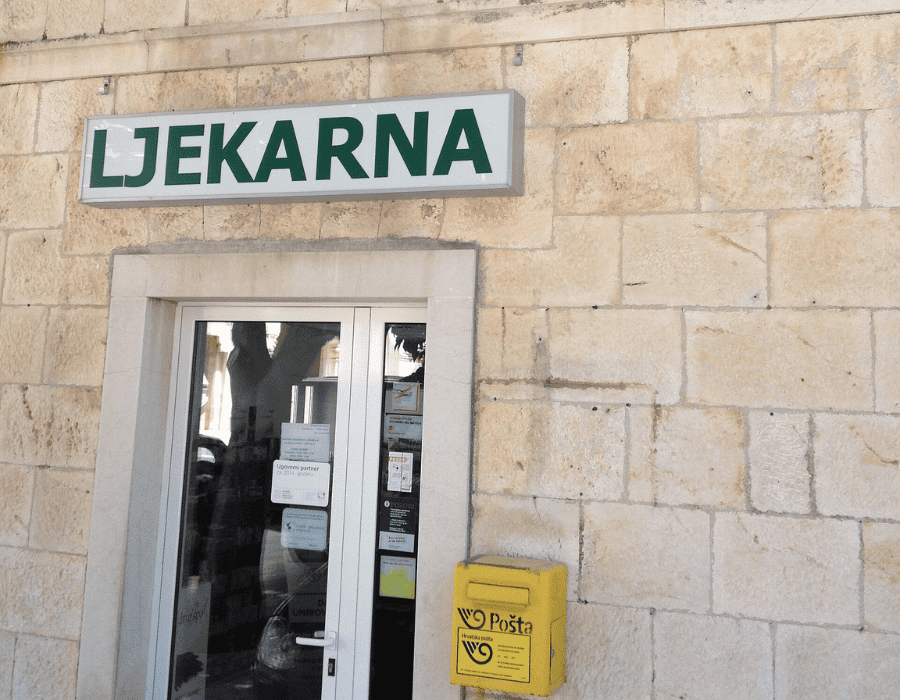
For most common travel ailments, your best first stop is a local Croatian pharmacy. Look for a sign with a green cross that says “Ljekarna.” You’ll find them in every town and city.
Croatian pharmacists are highly trained health professionals. They speak excellent English in most tourist areas and can give you great advice for everything from allergies to an upset stomach. They can provide over-the-counter remedies, recommend a cream for that nasty mosquito bite, and tell you if they think you should see a doctor.
If you need a pharmacy after hours, don’t worry. They operate on a rotating system. Just go to any pharmacy, and you’ll find a notice on the door listing the name and address of the nearest one that is currently na dužnosti (on duty).
For Non-Urgent Problems: Finding a Doctor
If you have an issue that’s more than a pharmacist can handle but isn’t a full-blown emergency (like a persistent fever, an ear infection, or a sprain) it’s time to see a doctor.
Public vs. Private
You’ll have two main options. A public health center (dom zdravlja) is one choice, but for tourists, a private clinic (poliklinika) is almost always faster, easier, and more likely to have English-speaking staff ready to help.
How Air Doctor Can Help
Instead of spending your precious vacation time Googling clinics and hoping for the best, an app like Air Doctor can be a lifesaver. It takes the guesswork out of the process. You can use it to find a vetted, English-speaking doctor near you, read reviews from other travelers, and book an appointment right from your phone.
If you’re on a boat or just don’t feel well enough to travel, the best part is the video consultation option. You can talk to a doctor from your hotel room, get a diagnosis, and have a prescription sent to a nearby pharmacy. It’s the simplest way to get care without the hassle.
For Serious Issues: Hospitals and Emergency Care
If you are dealing with a true emergency, you need to know where to go and who to call.
On the Mainland
In major cities like Split, Dubrovnik, Rijeka, and Zagreb, you will find large, modern hospitals that are equipped to handle any medical emergency.
On an Island
This is the most important advice for anyone sailing or island-hopping. The smaller Croatian islands usually do not have hospitals. They may have a small clinic or a single doctor, but they are not equipped for serious emergencies.
If you have a serious medical issue on an island, you will need to be transported to a hospital on the mainland. This is usually done by a fast-boat or, in life-threatening situations, a helicopter. It’s an efficient system, but it’s crucial to know that this will be the process.
Emergency Numbers
In any emergency, the only number you need to remember is 112.
This is the single European emergency number. It’s free to call, and it connects you to police, fire, and ambulance services. The operators speak English and will dispatch the help you need.
What About Payment? (EHIC vs. Travel Insurance)
Worrying about the cost is the last thing you want to do when you’re sick. Here’s the simple breakdown.
EHIC
If you’re an EU citizen, your European Health Insurance Card (EHIC) will allow you to access public healthcare in Croatia on the same terms as a local. It’s a great safety net, but it has big limitations. It will not cover you at a private clinic, and it will not cover the cost of being medically evacuated from an island.
Travel Insurance
This is your key to stress-free care. Good travel insurance will cover you for treatment at private clinics and hospitals. Most importantly, it will cover the potentially massive cost of an emergency medical evacuation, like that helicopter ride from an island to the mainland. Don’t leave home without it.
A Quick Guide to Common Travel Ailments in Croatia
Let’s take a quick look at some of the common illnesses you may experience while you’re in Croatia.
Sunburn and Heat Exhaustion
The Croatian sun is glorious, but really strong. Drink more water than you think you need, wear a hat, and use high-SPF sunscreen. If you feel dizzy or nauseous after a day in the sun, get into the shade immediately, drink water, and place a cool cloth on your forehead.
Sea Urchin Spines
It’s a classic Croatian holiday mishap: stepping on a spiky sea urchin. It’s painful, but usually not dangerous. Whatever you do, don’t try to dig the spines out with tweezers, as they are brittle and will break off under your skin. The local trick is to soak the area in vinegar for 15-30 minutes, which can help dissolve the spines. If you can find it, a local pharmacist can also give you a special black drawing-salve (crna mast) to help draw the spines out naturally.
In Short
- For minor issues like a cold or sunburn, go to a pharmacy (Ljekarna).
- For non-emergencies that need a doctor, find a private clinic or use an app like Air Doctor to connect with an English-speaking provider.
- In a true emergency, dial 112.
- If you’re on an island, know that any serious issue will require evacuation to a hospital on the mainland.
- Always have travel insurance that includes medical evacuation coverage. It’s non-negotiable.
About Air Doctor
The Air Doctor app connects you to a global network of multi-lingual doctors and specialists, allowing you to access medical care wherever you are. With Air Doctor, you can choose from a clinic visit, at-home (hotel) consultation, or video call. The app is active in 78 countries and provides 24/7 multi-lingual support, transparent pricing, and access to a wide range of medical specialties.
FAQs
Dial 112. This is the general emergency number. The operators can assist you in English.
For minor issues, find the local pharmacy or clinic. For a serious emergency, dial 112. Be prepared to be medically evacuated to a hospital on the mainland.
Yes. The EHIC is great for basic care in the public system, but it does not cover private treatment or medical evacuation from an island, which can be extremely expensive. Travel insurance covers these critical gaps.
Yes, the standard of medical care in Croatia is very high, especially in the private clinics and major hospitals in cities like Zagreb, Split, and Dubrovnik. Many doctors are trained internationally and speak excellent English.