South Korea is a safe, modern, and endlessly exciting place to travel. Between the incredible food in Seoul, the beautiful beaches of Busan, and the rich culture everywhere in between, it’s easy to see why it’s on so many travel lists.
While nobody plans to get sick on vacation, figuring out a foreign healthcare system can feel stressful. The good news is that with a little preparation, navigating clinics and pharmacies in South Korea is more straightforward than you might think. This guide offers practical tips for travelers, from dealing with a minor cold to knowing where to go if something more serious happens.
What to Know About South Korea’s Healthcare System

South Korea has a reputation for a high-quality, modern, and efficient healthcare system. This is especially true in major cities like Seoul and Busan, where hospitals and clinics are often equipped with state-of-the-art technology. You’ll find that the standard of care is excellent.
For residents, the system is funded by mandatory National Health Insurance (NHI). As a traveler, however, you will typically be expected to pay for all medical services out-of-pocket. This is why having good travel insurance is so important, but we’ll get to that later.
Pharmacies in South Korea: Your First Stop for Minor Issues
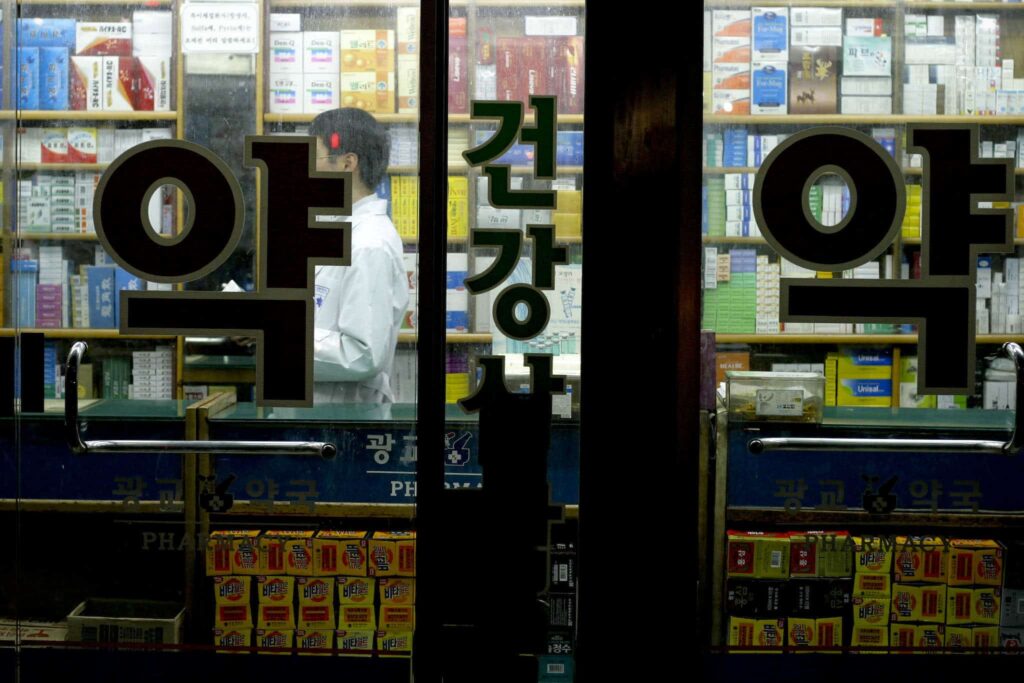
For common travel ailments like a headache, an upset stomach, or the first signs of a cold, your first stop should be a local pharmacy.
You can find pharmacies, known as yak-guk (약국), in almost every neighborhood. Just look for the prominent green cross sign (십자) or the word “약” (yak). They are often conveniently located near clinics and subway stations.
You can buy many familiar over-the-counter (OTC) medications without a prescription. Some basic remedies, like certain painkillers and cold medicines, are even available at designated 24-hour convenience stores like GS25 or CU, which is helpful if you need something late at night.
Popular health and beauty stores like Olive Young also stock a range of wellness products, vitamins, and skincare items, though for specific medications, a pharmacy is your best bet.
While many pharmacists in tourist-heavy areas may speak some English, it’s not always guaranteed. It’s a good idea to have a translation app like Papago on your phone to help describe your symptoms. Simply showing the pharmacist a written description or a picture can work wonders.
When to See a Doctor: Clinics vs. Hospitals

If your symptoms are more than a pharmacy can handle, you’ll need to see a doctor. In South Korea, you generally have two choices: a local clinic or a larger hospital.
- Clinics (의원, uiwon): These are the best option for non-emergency issues. Think of them as your local doctor’s office. You can find specialist clinics for almost anything, including internal medicine (naegwa), dermatology (pibugwa), or ear, nose, and throat (ibinhugwa). For a persistent cold, a minor injury, or a skin rash, a local clinic is the perfect place to go.
- Hospitals (병원, byeongwon): For more serious conditions, accidents, or if you need comprehensive tests, a larger hospital is the right choice. It’s also where you’ll find emergency rooms. Interestingly, it’s quite common in South Korea for people to visit a hospital for issues that might seem minor elsewhere, like a bad flu.
Many large hospitals in Seoul have dedicated International Health Centers designed to help foreigners. These centers have doctors and administrative staff who can assist with everything from scheduling appointments to billing, making the entire process much smoother for travelers.
Understanding Healthcare Costs for Travelers
Medical care in South Korea is generally more affordable than in countries like the United States, but costs can add up quickly for travelers paying out-of-pocket.
A standard consultation at a local clinic for a minor issue typically costs between KRW 30,000 to KRW 80,000 (approximately $25 to $60 USD). Any tests, treatments, or prescription medications will be an additional charge. A visit to a hospital emergency room will be more expensive.
This is why having comprehensive travel health insurance is essential. Before your trip, confirm that your policy covers medical expenses abroad, including emergency evacuation. Keep a copy of your insurance information with you, as you will likely need to pay upfront and file a claim for reimbursement later.
Common Health Concerns for Travelers in South Korea

While South Korea is a very safe and clean country, there are a few specific health-related things to keep in mind during your visit.
- Air Quality: “Yellow dust” (hwangsa) and fine dust pollution (mise-meonji) can be a concern, especially in the spring months from March to May. This dust blows over from desert regions in China and Mongolia and can irritate the eyes and respiratory system. It’s wise to check the daily air quality index and consider wearing a mask (KF94 masks are the local standard) on days with high pollution levels.
- Seasonal Health: Summers in Korea are hot and humid, so it’s important to stay hydrated to avoid heat exhaustion. Winters, on the other hand, can be extremely cold and dry. Be sure to pack accordingly to protect yourself from the elements.
- Food and Water Safety: Food hygiene standards are generally high, even for street food. However, traveler’s diarrhea can still happen when your body is adjusting to new foods and bacteria. While tap water is treated, most locals and travelers prefer to drink bottled or filtered water.
- Rural Health Risks: If your travels take you to rural or forested areas, be aware of mosquitoes and ticks, particularly between May and November. Mosquitoes can carry Japanese encephalitis, and ticks can transmit certain diseases. These risks are very low in cities.
What to Do in an Emergency
Knowing the right numbers to call in an emergency can save valuable time. Save these in your phone before you arrive.
- 119: This is the number for fire and ambulance services. Call this for any medical emergency requiring immediate attention.
- 112: This is the number for the police.
- 1330: This is the Korea Travel Hotline. It’s a fantastic 24/7 service for tourists, offering assistance and interpretation in English. They can even help with three-way calls to emergency services if you need a translator.
- 1339: This is the Emergency Medical Information Center, specifically for medical assistance for international visitors.
In Short
- South Korea has a high-quality, modern healthcare system, but it can be expensive for travelers paying out-of-pocket.
- For minor issues like colds or headaches, local pharmacies (yak-guk) are your best first stop.
- Visit a local clinic (uiwon) for non-emergencies and a larger hospital (byeongwon) for serious conditions.
- Always have comprehensive travel insurance to cover any unexpected medical costs.
- Save these key emergency numbers: 119 for an ambulance and 1330 for the English-speaking tourist hotline.
About Air Doctor
With the Air Doctor app in your pocket, you can access medical care and receive expert medical guidance anywhere you travel.
Air Doctor offers a wide range of benefits, including:
- A global network of multi-lingual doctors and specialists
- Choice of clinic, at-home (hotel), and video consultations
- 24/7 multi-lingual support
- Transparent pricing and reviews
- Most common medical specialties, including cardiologists, GPs, and gynecologists
FAQs
For tourists paying without insurance, healthcare can be expensive. A simple doctor’s visit may cost around $25-$60 USD, but hospital stays or specialized treatments will be much more. It is highly recommended to have travel insurance.
Yes, you can buy a wide range of over-the-counter medicines for common ailments at pharmacies (yak-guk) without a prescription. Some basic items are also sold at designated convenience stores.
For an ambulance or fire department, dial 119. For police, dial 112. For tourist assistance and translation, the 24/7 Korea Travel Hotline is 1330.